A roof that has guarded your family for two decades or more is running on borrowed time. Between freeze-thaw cycles that split the asphalt, heavy winter snow loads, and summer storms that lift the edges, a Northeast Ohio roof ages faster than the same shingles would in a mild climate. The hard part for homeowners is knowing the difference between a roof that needs a small repair and one that is genuinely finished.
You should plan to replace an asphalt shingle roof when it reaches 20 to 30 years of age, or sooner if you see the major failure signs: shingle granules collecting in your gutters, edges curling or cupping, bald shingles, sagging rooflines, and repeated water stains showing up inside. Waiting until water is dripping through the ceiling usually means the leak has already rotted decking and grown mold, which turns a roofing job into a far more expensive restoration.
How Long a Shingle Roof Really Lasts Here
Manufacturers print “lifetime” on the wrapper, but real-world lifespan depends on the shingle type, the install, the ventilation, and the weather. In our experience across Stark and Summit County:
- 3-tab shingles: 15 to 20 years, often less on a windy, exposed roof.
- Architectural shingles: 25 to 30 years when installed correctly with good attic ventilation.
- Premium SBS-modified shingles (like Landmark NorthGate): the top of that range, with better resistance to the cold-cracking and hail that shorten other roofs.
The single biggest factor people overlook is ventilation. A roof with a hot, poorly vented attic bakes from underneath and can lose years off its life, which is why two identical roofs on the same street can age very differently.
The Warning Signs You Can See From the Ground
You should never climb up on your own roof, but you can spot most of these from the driveway with a pair of binoculars.
1. Granules Piling Up in Your Gutters
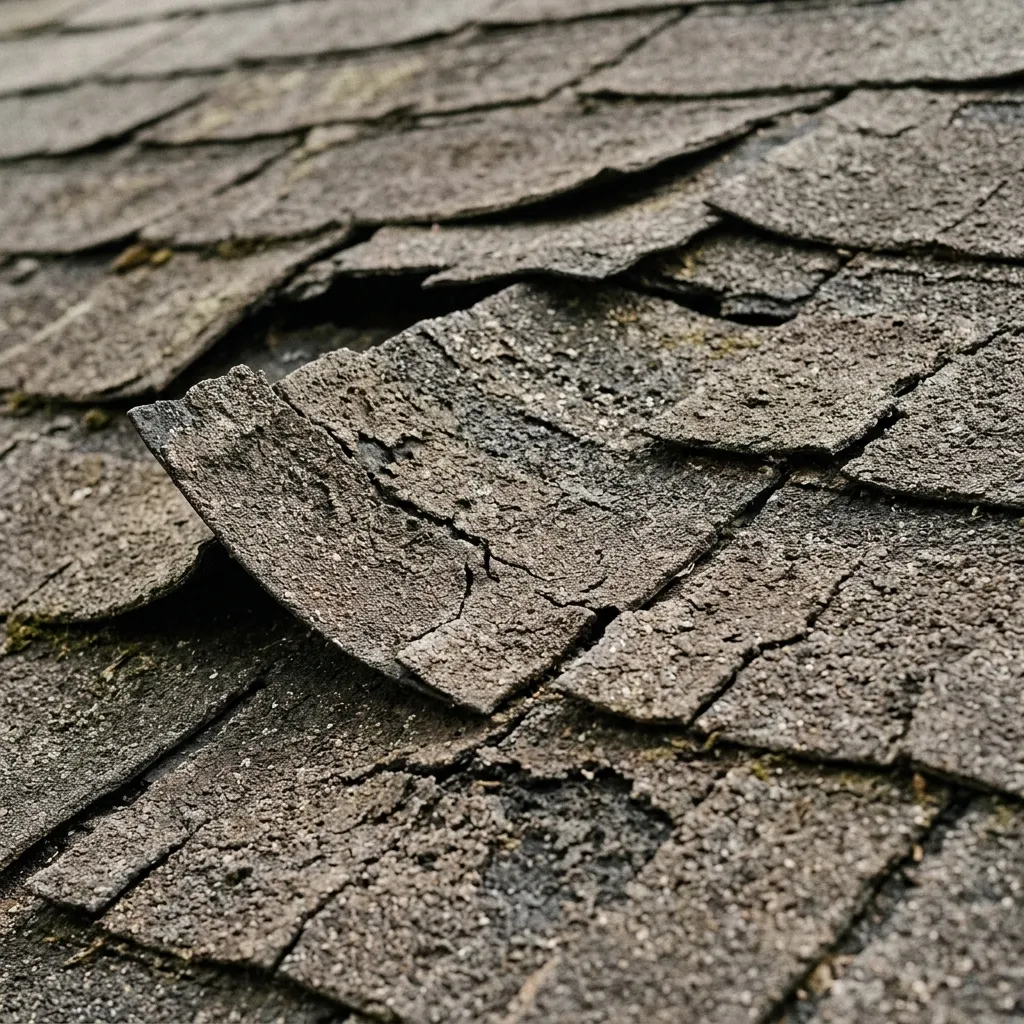
Asphalt shingles are coated in ceramic granules that shield the asphalt from UV rays. As the shingle ages, the asphalt dries and the granules let go. When you clean your gutters and find piles of coarse, sand-like grit, the shingles are shedding their protective armor, and once that armor is gone the asphalt cracks fast.
2. Curling, Cupping, or Clawing Edges
Heat, age, and trapped attic moisture make shingles deform. Cupping is when the corners lift; curling is when the center rises; clawing is when the edges press down and the middle bulges. All three break the seal and let wind-driven rain get pulled up underneath the shingle.
3. Missing Shingles After a Storm
If a routine spring windstorm leaves two or three shingles on your lawn, the thermal sealant strip that bonds the courses together has dried out and failed. When that adhesive lets go, the shingles flap, tear at the nail line, and peel off in the next gust.
4. Daylight or Sagging in the Attic
From inside, daylight showing through the decking or a roofline that visibly dips or sags points to deck rot or structural moisture. A sagging deck is past the warning stage and needs professional eyes quickly.
5. Repeated Water Stains on Drywall
Brown rings on the ceiling or damp drywall near exterior walls mean water has already beaten the shingles, underlayment, and decking. One isolated stain might be a single flashing repair. Stains in multiple rooms point to a roof system that is failing across the board, and that is when a Canton roof inspection earns its keep by telling you exactly how much life is left.
Repair or Replace? How to Decide
Not every aging roof needs to come off. We weigh four things when we give you an honest answer:
- Age: A roof in its mid-twenties with widespread granule loss is a replacement candidate even if it is not leaking yet.
- Extent of damage: Isolated damage on a younger roof is a repair. Damage scattered across multiple slopes is a replacement.
- Number of layers: If there is already more than one layer of shingles up there, code and good practice require a tear-off, not another layer.
- Decking condition: If the plywood underneath is soft or rotted, no surface repair will hold.
We would rather sell you a $400 repair that buys you five more years than push a replacement you do not need. After more than 1,200 roof replacements and 1,500 repairs, our reputation rides on telling homeowners the truth, and our free inspection comes with a written report and photos so you can see what we see.
Why We Never Do a Layover
Some contractors will offer to save you money by nailing new shingles directly over the old ones. This is called a layover, and we will not do it. Here is why, in plain terms.
Laying new shingles over old ones traps heat against the new shingles and cooks them from below, which can cut their lifespan nearly in half. Worse, it hides the decking. If your old shingles were leaking, the plywood underneath is likely rotted, and you cannot nail a new roof securely into rotted wood. Those shingles will lift and blow off in the next big wind. A layover also adds dead weight to a structure that was engineered for one layer. It is a shortcut that costs the homeowner more in the long run, and that is exactly the kind of corner-cutting we built this company to avoid.
What a Proper Replacement Includes
When we replace a roof, we do a complete tear-off down to bare decking. We replace any rotted plywood, lay down high-quality synthetic underlayment, install ice-and-water shield along the eaves and in the valleys, set new drip edge and flashings, and nail down CertainTeed Landmark Pro architectural shingles with proper ridge ventilation. Our factory-certified crews finish 99% of these in a single day, and the cleanup is meticulous: we cover your plants and landscaping, protect windows, and run magnetic sweepers across the yard and driveway to pull every nail. We back the labor with a 10-year transferable workmanship warranty.
Common Questions About Replacing a Roof
Can I get one more year out of an old roof? Sometimes, with a targeted repair to buy time. But once granule loss is widespread and shingles are curling, you are gambling on whether the next storm forces an emergency replacement on the roofer’s schedule instead of yours.
How much does a roof replacement cost in Ohio? A smaller home runs about $6,000 to $7,000, the average is around $10,000, and large or upgraded roofs can pass $20,000. Pitch, square footage, layers to remove, and decking repairs drive the final number, so we inspect before we quote.
Will insurance pay to replace an old, worn-out roof? Generally no. Homeowners insurance covers sudden storm damage, not normal wear and aging. If a storm damaged an older roof, an inspection and proper documentation determine what is claimable.
How long does a roof replacement take? About 99% of our residential replacements are done in one day. Very large or complex homes may take a day and a half, but a typical house is a single-day job from tear-off to final cleanup.