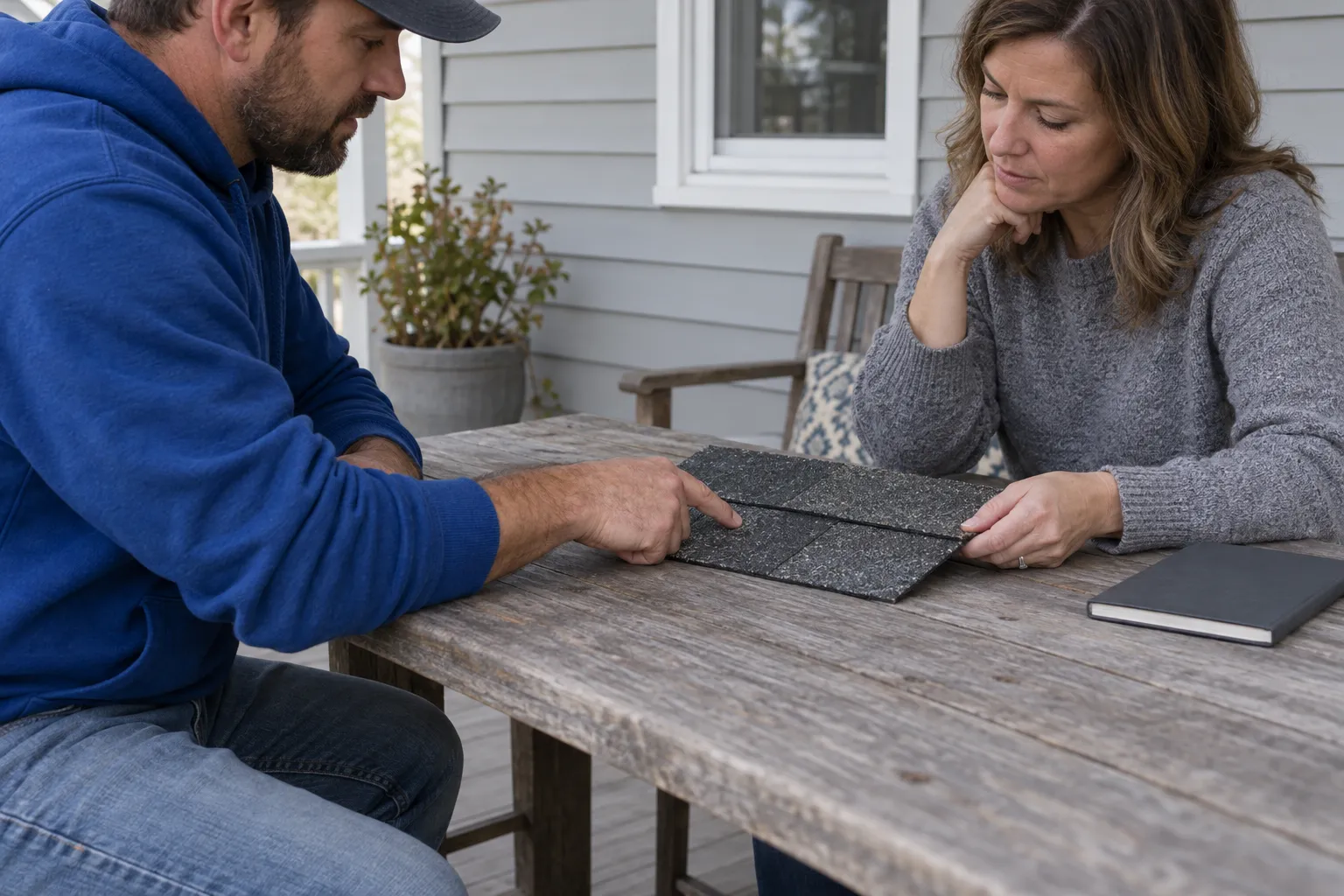
A windstorm can wreck your roof’s waterproofing without blowing a single shingle into the yard. That is the trap homeowners fall into: they walk outside after a storm, see no missing shingles, and assume the roof is fine. Meanwhile the wind has already broken the seals and cracked the mats on shingles that are still sitting right where they belong.
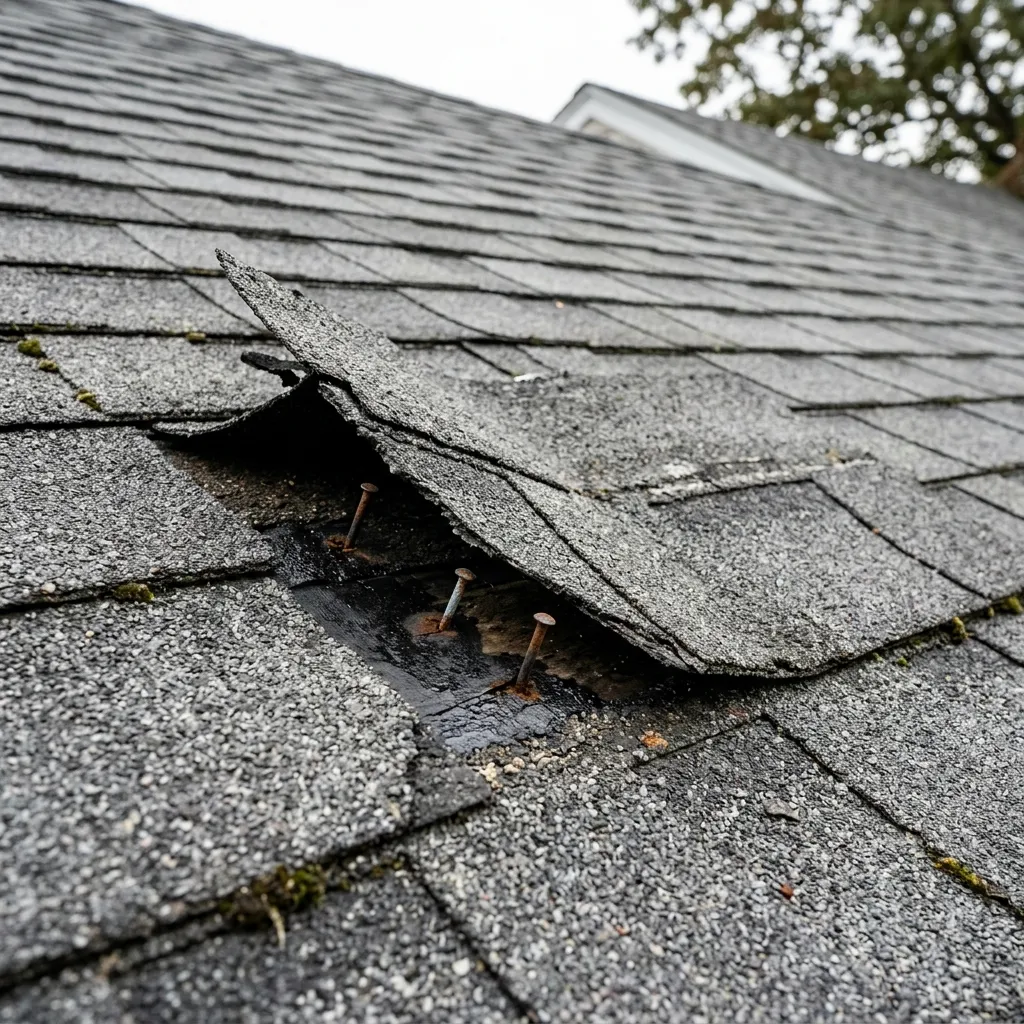
To check for wind damage, look for creased or folded shingle tabs, lifted shingles where the adhesive seal has let go, exposed or backed-out nail heads, and missing sections that show the black underlayment underneath. Once a gust breaks the thermal seal that bonds the shingles together, those shingles will flutter in moderate wind and leak in the next rain, even if they never fully detached.
The Invisible Damage: Broken Seals and Creases
Every architectural shingle has a strip of factory adhesive that, once warmed by the sun, glues each course to the one below it. That seal is what keeps the roof a single locked-down surface in a storm. Here is the physics of how wind defeats it: as wind moves across the roof, it creates a pressure difference, lower pressure above the shingle, higher pressure underneath. That suction pries the shingle upward. When the gusts pass roughly 50 mph, the lifting force breaks the adhesive bond.
Once that seal is broken, three bad things happen:
- Creases form. The shingle flaps back and forth and folds along a line near the top edge. That crease cracks the fiberglass mat underneath, and a creased shingle has permanently lost its waterproofing even if it lies back down flat.
- Dirt contaminates the seal. While the shingle is lifted, dust and grit settle on the exposed adhesive strip. Even after the wind dies and the shingle drops, that contaminated strip will never re-seal on its own.
- Water gets driven under. Wind-driven rain blows up under the now-loose shingle, runs into the nail holes, and starts rotting the decking, the same slow leak we trace back during repairs all the time.
Spotting Wind Damage From the Ground
You do not need to climb a steep, possibly damaged roof to find the evidence. After a storm, look for:
- Shingles or pieces in the yard: Any shingle tabs or strips on the lawn, driveway, or in the bushes mean the roof has active wind damage. Save them, your roofer and adjuster will want to see them.
- Straight shadow lines: Look at the roof when the sun hits it at a low angle. Long, straight horizontal shadows mean a course of shingles is lifted and no longer lying flat.
- Piles of granules in the gutters: Storms accelerate granule loss. A surge of grit and shingle tabs in the gutters after a wind event is a red flag.
- Bent flashing or damaged vents: Check chimney flashing, drip edge, and plastic roof vents for cracks and dents, which are easy-to-see proof of storm force.
Spring is the worst stretch for this in Northeast Ohio. The gust fronts that roll across Stark and Summit County ahead of a thunderstorm are exactly the kind of straight-line wind that breaks seals across a whole slope. If you find any of these signs, getting emergency storm and wind damage repair on the schedule before the next rain is what keeps a sealed-up roof from becoming a soaked, rotted one.
What to Do in the First 24 to 48 Hours
Time matters after wind damage, because the next rain is what turns broken seals into interior leaks.
- Document from the ground. Photograph any shingles in the yard, dented gutters, and damaged siding. Note the date and time of the storm.
- Do not climb up. A storm-damaged roof may have loose shingles and hidden weak spots. Leave the roof itself to a pro.
- Get emergency tarping if water is getting in. If there is an active leak, a temporary tarp over the area buys time and limits interior damage. We handle emergency tarping 24/7.
- Schedule a professional inspection. A roofer walks the whole roof, photographs every lifted seal and crease, and checks the attic for active water entry, the documentation your insurer needs.
Navigating the Insurance Claim
Most homeowners policies cover sudden wind damage, but a claim lives or dies on documentation. Here is how to handle it so you get the full repair you are owed:
- Get a written inspection report first. We document the damage with high-resolution photos and measurements before you ever call your insurer, so you go in with evidence instead of a guess.
- File the claim. Call your agent and provide our report as supporting documentation.
- Meet the adjuster on the roof. The insurer sends an adjuster to verify the damage. We meet them on-site and walk the roof together, because lifted seals and hairline creases are exactly what an adjuster in a hurry tends to miss.
- Push back when the estimate falls short. When the first offer does not cover doing the job properly, we negotiate supplements with the carrier. We have handled more than 1,000 insurance claims across Northeast Ohio and have worked with State Farm, Allstate, Progressive, Nationwide, Liberty Mutual, Grange, and Travelers, so we know what a fair scope looks like. Our insurance claim assistance is built around getting the roof paid for correctly, not just quickly.
A Straight Word on Your Deductible
Be very careful with any roofer who offers to “cover,” “eat,” or “waive” your insurance deductible to win your business. In Ohio, that is insurance fraud and a felony, and a contractor willing to break that law is telling you exactly how they will treat the rest of your job. The homeowner is legally responsible for paying the deductible. What we can do, honestly and legally, is offer financing through Foundation Finance and Acorn Finance to help you manage the out-of-pocket cost over time. If a roofer’s whole pitch is “free roof, we’ll handle the deductible,” walk away.
Common Questions About Roof Wind Damage
Does homeowners insurance cover wind damage to a roof? In most cases, yes. Wind is a covered peril on standard policies, but the claim depends on documentation and your specific policy, including the deductible and any roof age or cosmetic exclusions.
How long do I have to file a wind damage claim? Policies have deadlines, often a year or two from the date of loss, but do not wait. The sooner you document and file, the easier it is to tie the damage to a specific storm and the less interior damage you accumulate.
Will filing a claim raise my premium? A single weather-related claim is treated differently than an at-fault claim, and many homeowners see little or no change for storm damage. Your agent can tell you how your specific carrier handles it.
Can wind-damaged shingles just be repaired, or do I need a full roof? It depends on how widespread the broken seals and creases are. Isolated damage is a repair. When a storm has broken seals across multiple slopes, a replacement is often the right call, and that is what the inspection and adjuster walkthrough determine.