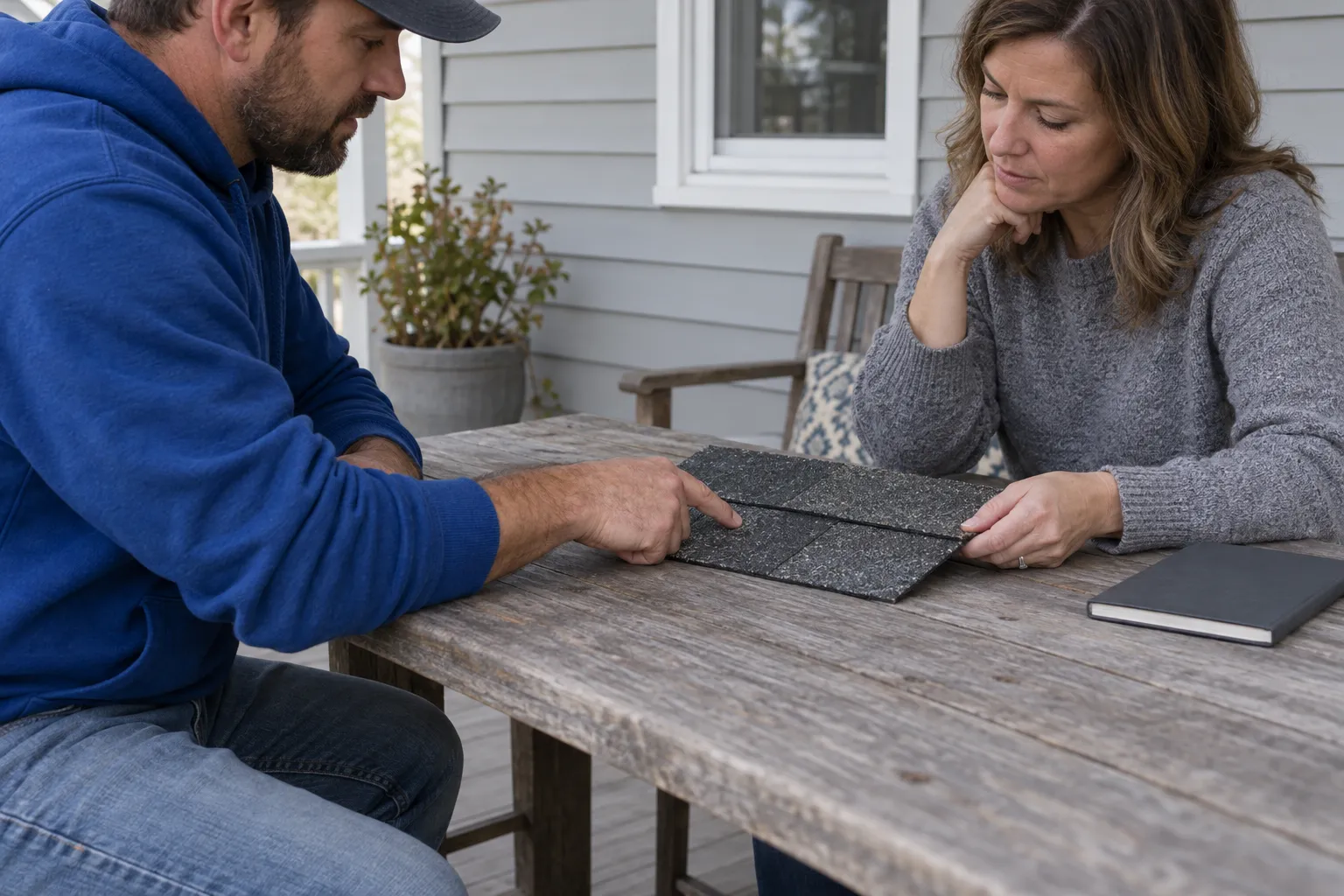
A single water stain on your ceiling can sit on top of thousands of dollars in hidden decking rot and attic mold. The drywall spot is the symptom you see, not the problem. The actual breach in your roof is usually several feet away, uphill, where you would never think to look.
To find a roof leak from the inside, head into the attic with a flashlight, find the wet framing, and follow that moisture trail up the rafters to its highest wet point, which is almost always near a pipe boot, chimney flashing, or a valley. Once water gets past the shingles, it runs down the slope of the decking and the rafters before it finally drips, so the entry point sits higher up the roof than the stain below it.
Why Water Never Drips Straight Down
Water follows the path of least resistance, and on a sloped roof that path is rarely vertical. When rain gets under a shingle, it lands on the wood decking and starts running downhill along the plywood seams and the sides of the rafters. Capillary action can even pull it sideways across a flat board. By the time it finds a nail hole or a gap to drip through, it may have traveled ten or fifteen feet from where it actually entered.
This is the single biggest reason homeowners (and a lot of inexperienced roofers) misdiagnose leaks. They patch the spot directly above the ceiling stain, the leak comes back with the next storm, and they assume they need a whole new roof. The fix is to ignore the stain and go find the source.
Step 1: Follow the Water Trail in Your Attic
Grab a bright flashlight and get into the attic. You are looking for the highest point that water has touched, because that is closest to the breach. Work your way up from the area above the ceiling stain and look for these tells:
- Wet or darkened framing: Run your hand along the rafters and decking. Damp wood and water tracks point you uphill toward the source.
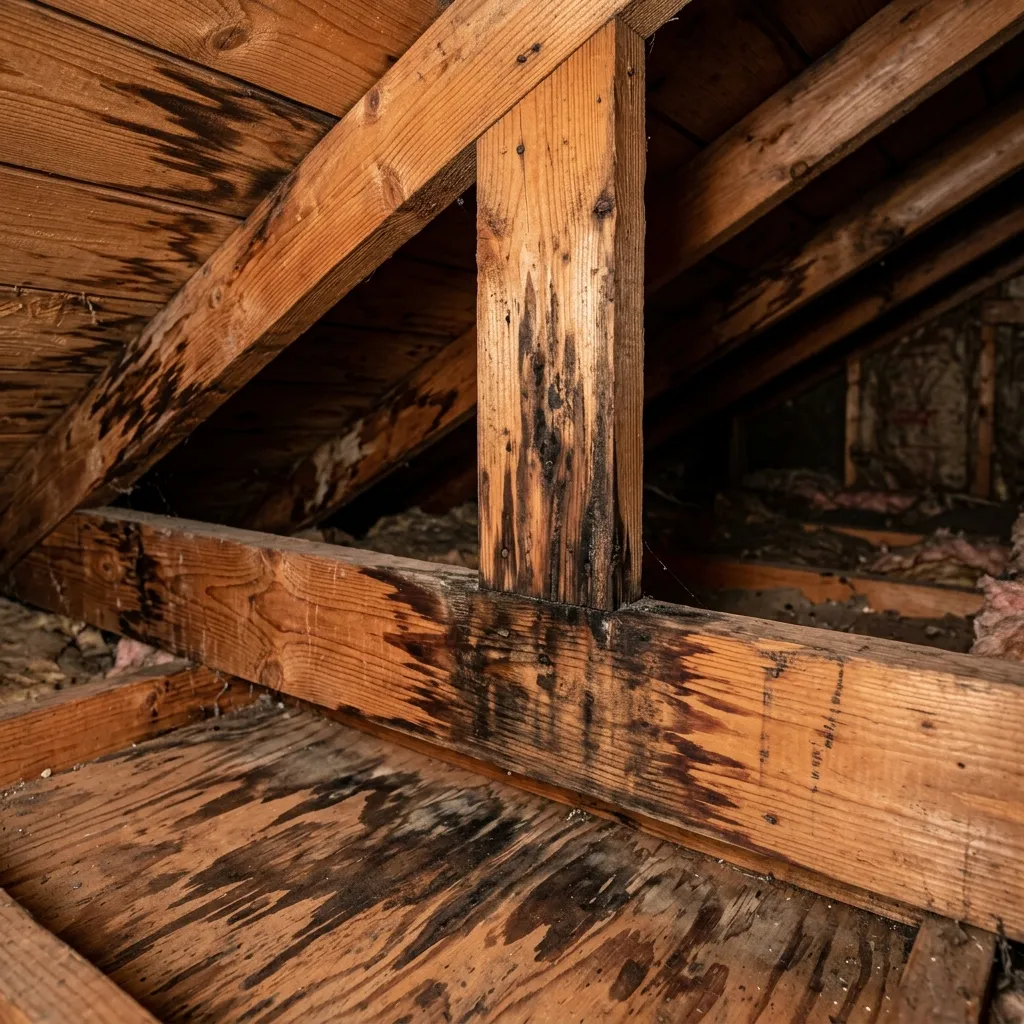
- Black staining or mold colonies: Old, repeated leaks leave dark trails or fuzzy black patches on the plywood. Fresh leaks leave clean wet streaks.
- Rusted nail shanks: Nails poking through the decking will rust where moisture hits them. A cluster of rusty nail tips marks a spot that gets wet often.
- Daylight: If you can see pinpoints of daylight through the decking with the lights off, water is getting in there too.
If you have spent your fall and winter dealing with recurring leaks, getting a Canton roof repair crew to trace and seal the source is far cheaper than re-patching the same ceiling every spring. We have pulled apart plenty of “mystery” leaks that three other roofers had given up on, including one home in Louisville that had leaked for fourteen years before our crew found the real entry point.
Step 2: Check the Usual Suspects
In our experience across Stark County and Summit County, leaks almost never start in the open field of a shingle. They start at penetrations and transitions, the spots where the roof plane is interrupted. Check these first, in this order:
- Plumbing pipe boots: The rubber collar around your plastic vent pipes is the number one leak source we find. The rubber dries out, hardens, and cracks after ten to fifteen Ohio winters, and then water runs straight down the pipe into the attic.
- Chimney flashing: The metal step flashing and counterflashing where brick meets shingle takes constant stress from expansion and freeze-thaw. Cracked mortar joints or a failed sealant bead let water seep behind the brick and down the chase.
- Roof valleys: Where two slopes meet, water channels in heavy volume like a creek. Rusted valley metal or shingles cut too tight to the centerline let that fast-moving water back up under the edges.
- Skylights and curbs: The flashing kit around a skylight has multiple seams, and the head flashing at the top is a classic failure point.
- Step flashing along walls: Where a roof slope meets a vertical wall (like a dormer), each shingle course needs its own piece of step flashing. Reused or caulked-over flashing fails fast.
Step 3: Run a Controlled Water Test
If the attic is dry and you still cannot pin down the source, you can simulate rain on a dry day. You need two people, a garden hose, and a phone to talk to each other.
One person stays in the attic with a flashlight, directly under the suspected area. The other starts the hose at the lowest part of the roof and works one small zone at a time. Start below a single pipe boot or valley, run water for five full minutes, then move uphill. The key is patience: isolate one feature, wait, and watch. The moment the person in the attic sees water, stop. You have found your entry point, and you did it without guessing.
Never get on a steep or wet roof yourself to do this. Wet shingles are slick, and an emergency-room bill costs far more than a repair. Run the hose from a ladder at the edge or hire it out.
Is It Actually a Leak, or Is It Condensation?
Here is something most online guides skip: not every wet spot in your attic is a roof leak. In a Northeast Ohio winter, warm humid air from your kitchen, bathrooms, and dryer rises into a poorly ventilated attic, hits the cold underside of the decking, and condenses into frost. When that frost melts on a warm afternoon, it drips and rots wood exactly like a leak would.
How to tell them apart:
- Condensation shows up as widespread dampness, frost, or rusty nail tips spread evenly across the underside of the deck, and it gets worse in cold weather, not during rain.
- A true leak is localized to one path and tracks directly to a penetration, and it shows up during or right after rain and snowmelt.
If your attic is sweating, the answer is not roof sealant. It is balanced ventilation, soffit intake plus ridge exhaust, and proper attic insulation. A roofer who sells you a patch for a ventilation problem is treating the wrong thing.
When to Stop and Call a Roofer
A flashing or pipe-boot repair on a one-story home is doable for a careful homeowner. You should stop and call a professional when the leak is on a steep pitch, when it is near a chimney or valley, when water has been getting in for a while, or when you simply cannot find the source.
We offer free roof inspections that include a full written report with photos, and there is no obligation to buy anything. Our crews are CertainTeed SELECT ShingleMaster certified, the manufacturer’s highest credential, and we back our repair work with a 10-year transferable workmanship warranty. Finding the leak is the hard part, and after more than 1,500 repairs across Northeast Ohio, finding it is what we are good at.
Common Questions About Roof Leaks
How much does it cost to fix a roof leak? Our repairs start at $300, and most straightforward flashing or pipe-boot repairs land in that lower range. The final number depends on access, the size of the failure, and whether water has already rotted the decking underneath, which is why an inspection comes first.
How long can I wait to fix a roof leak? Not long. Once water is in the decking, you generally have a short window before plywood swells, fasteners loosen, and mold starts colonizing the framing. A drip you ignore in March can become a sagging, rotted deck section by summer.
Can a small roof leak cause mold? Yes. Attic mold needs only moisture and a few days of warm temperatures to take hold, and it spreads through the framing and insulation long before it ever shows on your ceiling.
Does homeowners insurance cover a roof leak? It depends on the cause. Sudden damage from a storm or wind event is usually covered, while a leak from worn-out shingles or years of neglected maintenance typically is not. Our written inspection report documents the cause either way, which is exactly what an adjuster needs to see.