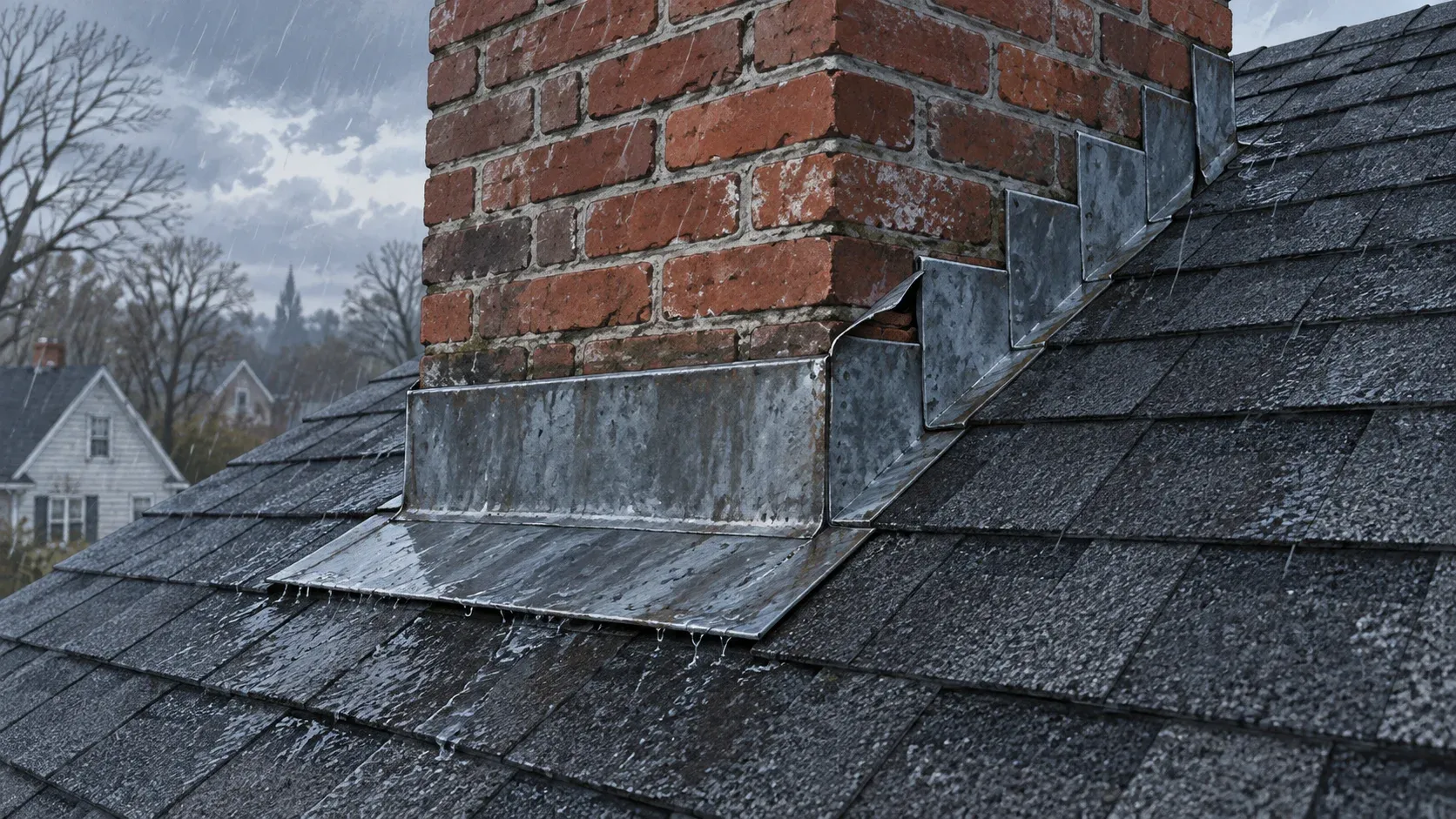
A brown ceiling stain beside your chimney means water has found a route indoors. A roof leaking around a chimney often has damaged or incorrectly installed flashing, the metal that seals the roof-to-brick junction. But cracked mortar, a damaged chimney crown, or an uncovered flue can also let rain in. The stain alone cannot tell you which repair will work.
For an Akron homeowner, that distinction matters. Replacing sound shingles will not fix water entering through brickwork above them. And coating the brick will not rebuild a failed flashing overlap hidden beneath the roof covering.
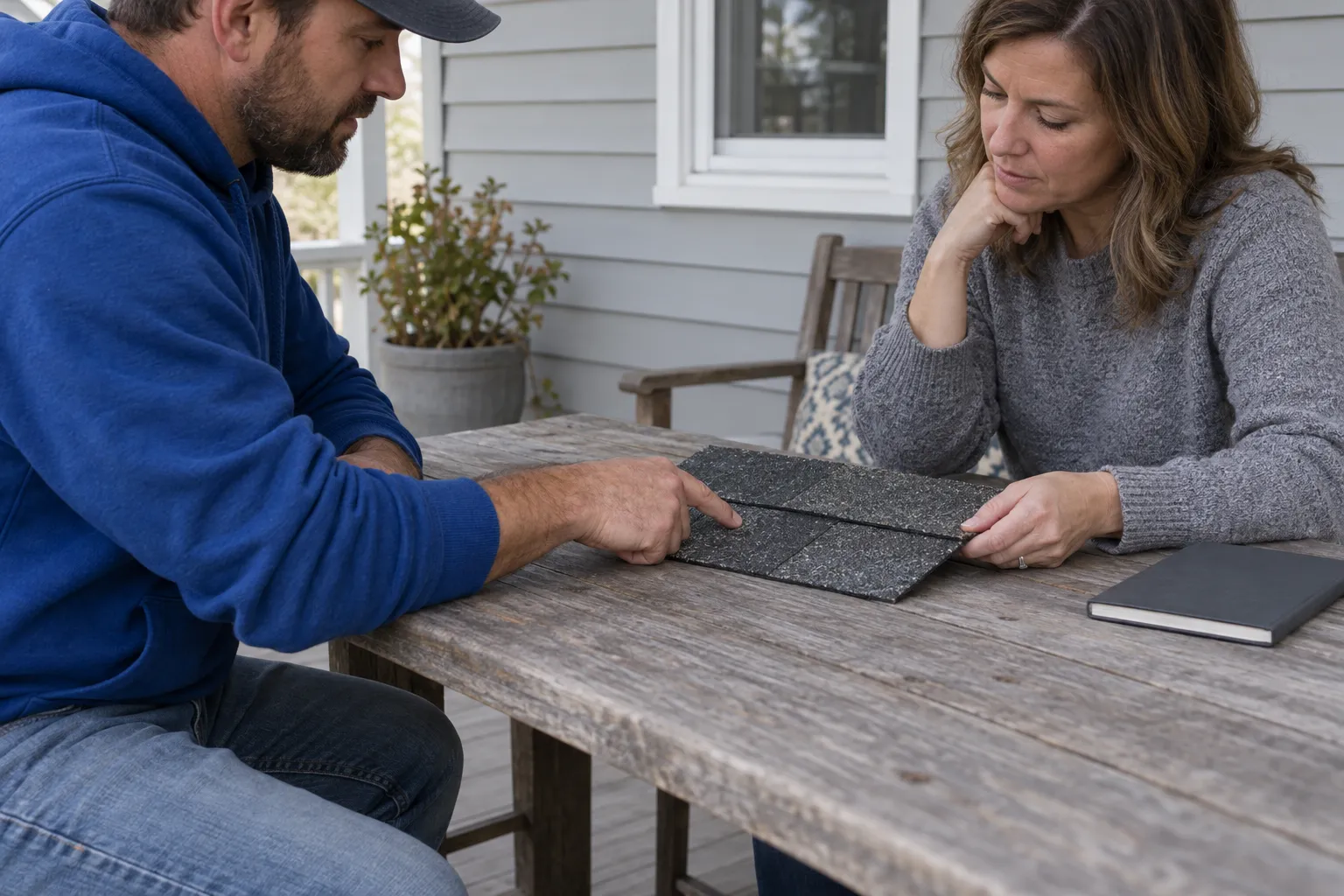
Our Akron team handles roof leaks and flashing repairs, starting with a free inspection and photos of the problem. A useful diagnosis should show you where water enters and explain how the proposed repair closes that route, before anyone recommends replacing the roof.
How Chimney Flashing Keeps Water Out
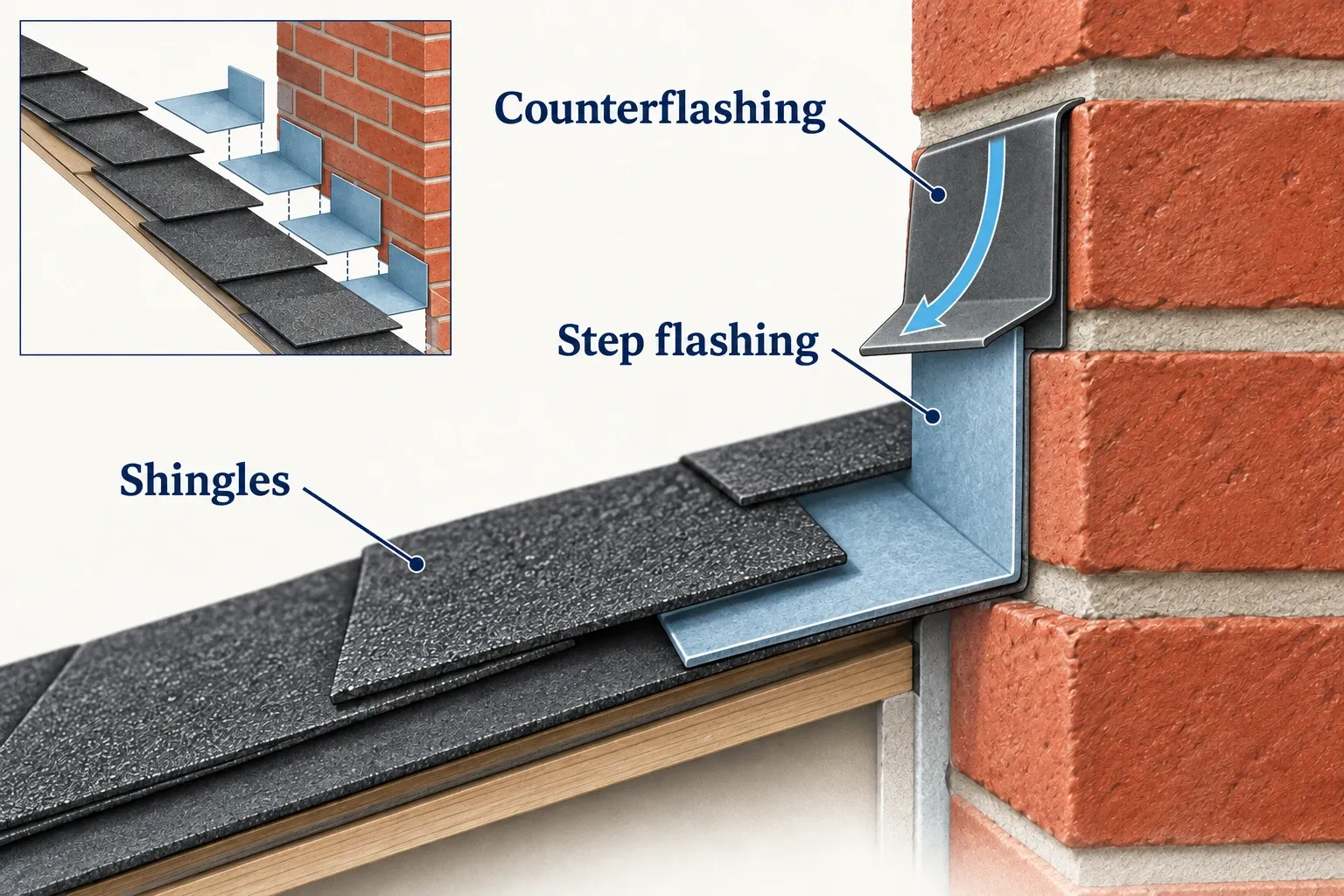
Think of flashing as a series of overlapping rain shields. Along each sloping side of a chimney, individual step flashing pieces alternate with the shingle courses. Their bent edges turn up against the masonry. Counterflashing covers those upper edges, with its top secured at the chimney, so rain running down the brick stays outside the roof assembly.
At the downhill face, an apron directs runoff onto the shingles below. The uphill side needs a detail that carries approaching water around the chimney. Each part must connect to the next without leaving a path underneath. Separate, overlapping pieces allow the roof and masonry to move without pulling the joint apart.
Where the system can fail
A roofer should check for corroded metal, open corners, displaced pieces, and failed seals where counterflashing meets masonry. Covered areas matter too. Metal can look tidy from the yard while the shingle-to-flashing sequence underneath lets water through.
The uphill side deserves a separate look. Leaves and debris can obstruct drainage behind the chimney. On some roofs, a cricket, a small peaked structure on the uphill side, helps split runoff around it. Its need and design depend on the chimney and roof geometry.
Why More Caulk May Not Stop the Leak
Sealant has a job. It can protect a properly designed joint where metal meets masonry. It cannot make absent step flashing appear or reverse a metal overlap that directs rain beneath the shingles.
A thick coating of roof cement may conceal the failed detail while leaving the water route underneath. If the leak returns, the next repair starts with removing that coating to see what is actually there.
Our recommendation: if someone proposes another surface patch, ask which joint failed and whether the metal beneath it is sound. Resealing a confirmed joint defect and smearing the whole chimney base are very different scopes of work.
Could the Water Be Coming Through the Chimney Itself?
Yes. The metal at roof level is only one checkpoint. A masonry chimney also has a crown, the sloped top that sheds water away from the brick, and usually a cap over the flue opening. A damaged crown, missing cap, or deteriorated mortar can admit water above perfectly serviceable flashing.
Brick can absorb moisture too, especially where mortar joints have deteriorated. A roof repair estimate should distinguish flashing work from masonry or chimney-system repairs that need a chimney professional.
Use these observations to describe the problem, not to diagnose it yourself:
| What you notice | What the inspection should investigate |
|---|---|
| A ceiling stain beside the chimney after rain | Flashing, adjacent shingles, and water paths from higher on the roof or chimney |
| Water inside the fireplace during rain | The cap, crown, flue area, and other chimney entry points |
| Damp brick or crumbling mortar indoors | Masonry moisture entry as well as nearby roof defects |
| A leak that appears mainly during snowmelt | Drainage restrictions, ice-related backup, and flashing condition |
| Dampness without recent rain or melting snow | Condensation or another moisture source, alongside the roof and chimney checks |
What Akron Homeowners Can Check Safely
Start inside. Photograph the stain and note whether it appears during steady rain, wind-driven rain, or a thaw. Record whether water reaches the fireplace, ceiling, or both. Those details help the person inspecting your home separate possible entry points.
From the ground, binoculars may reveal a displaced metal edge or missing chimney cap. They cannot confirm the condition of concealed flashing. Avoid climbing onto the roof, leaning out an upstairs window, or running a hose test yourself.
On older homes in Highland Square, Firestone Park, and Goodyear Heights, ask whether previous roofing work left older flashing in place. Age alone does not prove failure, but a newer roof covering does not prove that every chimney detail was rebuilt either.
If water is actively dripping, move belongings and catch it from a safe spot. Stay away from sagging ceiling material and wet electrical fixtures. Arrange an inspection promptly rather than waiting to see whether the next storm repeats the leak.
How We Fixed a Recurring Chimney Leak
On a Canton home, water kept getting in where the brick chimney met the roof. We installed custom-bent metal flashing to stop the recurring leak at that junction.
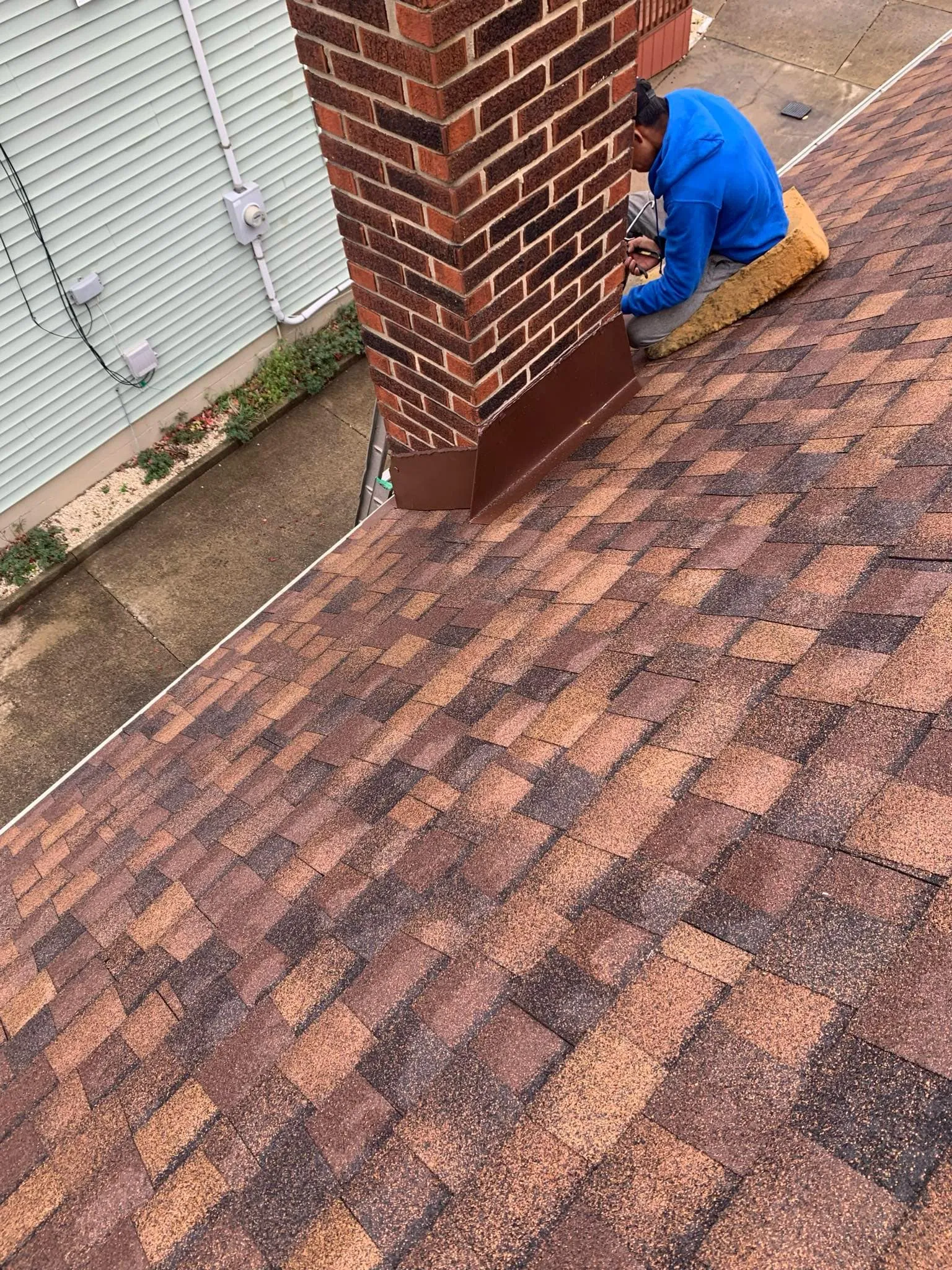
Our Akron roofing team starts by finding the cause, then recommends the repair your home needs. Ask which flashing detail needs rebuilding and how it will shed water once the work is complete.
What a Chimney Leak Repair Estimate Should Explain
Ask for a written scope that answers these questions:
- Where did the water enter? Request photos and an explanation of any uncertainty. If the cause remains unclear, controlled testing may be needed before specifying the repair.
- Which flashing pieces need work? The estimate should distinguish a counterflashing joint repair from rebuilding the base and step flashing beneath the shingles.
- What must be opened up? Ask whether adjacent shingles will be removed and how damaged underlayment or wood decking will be handled if exposed.
- Is masonry work separate? Confirm who handles damaged mortar, brick, crowns, or caps, and whether that work is included.
- How will the repair be checked and covered? Ask for completion photos, the verification method, and written workmanship warranty terms for the proposed scope.
We offer a 10-year transferable workmanship warranty. Have the applicable coverage written into your repair agreement so you know what is covered and how to report a problem.
Common Questions About Chimney Roof Leaks
Do I need a new roof if it leaks around the chimney?
Not necessarily. If the failure is confined to flashing and the surrounding roof is serviceable, a localized repair may be appropriate. Widespread deterioration or extensive damaged decking can change that recommendation. The inspection should establish which situation you have.
Can the flashing be repaired without replacing shingles?
Sometimes. An accessible counterflashing joint may be repairable without disturbing the roof covering. Replacing step flashing usually requires opening the surrounding shingle courses. Brittle or damaged shingles may need replacement as part of that work.
Who should I call, a roofer or a chimney specialist?
For a ceiling leak at the roof-to-chimney junction, a roofer can investigate the flashing and adjoining roof. Water inside the fireplace or visible masonry deterioration also calls for a qualified chimney professional. Some leaks involve both trades; ask each contractor to make the limits of their scope clear.
Will a chimney cap fix a leak around the base?
Only if water entering through the uncovered flue is the source. A cap cannot repair failed roof flashing or damaged masonry below it. Find the entry point before choosing the fix.